Last fall I walked into a pitch with a client I had been chasing for almost two years. I had the deck. I had the pricing. I had the team behind me. I was sure I knew exactly how this engagement was going to be structured, because I had sold a hundred versions of it before.
They said no.
Not no to the work. No to the structure. The CEO sat back in his chair and said, "Jay, this is not the deal we want. We want something different and I think you can help us build it. But you are going to have to be willing to throw out the proposal you walked in with."
I had two choices. I could have defended the proposal. I had reasons. The structure had worked for hundreds of clients. The pricing was fair. The deliverables were proven.
Or I could put the proposal away and listen.
I put it away. We rebuilt the engagement together over the next three meetings. The version we landed on is better than what I walked in with. They are now one of our best clients. They have referred two other companies. The reason any of that happened is because I was willing, for one hour in a conference room, to be wrong out loud about something I had been right about for a long time.
That is the muscle I want to talk about today. Because in 2026, every leader is going to need it weekly.
Two failure modes
I have watched leaders fail in two opposite directions and both come from the same misunderstanding.
The first is arrogance. You build a track record, cash in some wins, and over time you start to believe your pattern recognition more than you believe new information. When new information arrives that contradicts your model, you defend the model. You go heavier on conviction precisely when you should be going lighter.
I have done this. Most leaders I respect have done this. It feels like leadership in the moment because you are being decisive. But what you are actually doing is closing your loop. The next time the world changes underneath you, you will be the last one to notice.
The second failure is the opposite. You take in so much new information that you can never plant a flag. Every smart-sounding objection derails the call you were about to make. People stop bringing you decisions because they know what they will get back is more questions.
This one is harder to see because it looks like humility. It is paralysis dressed as humility. Your team needs you to make calls. They cannot operate inside the soup of your endless reconsideration.
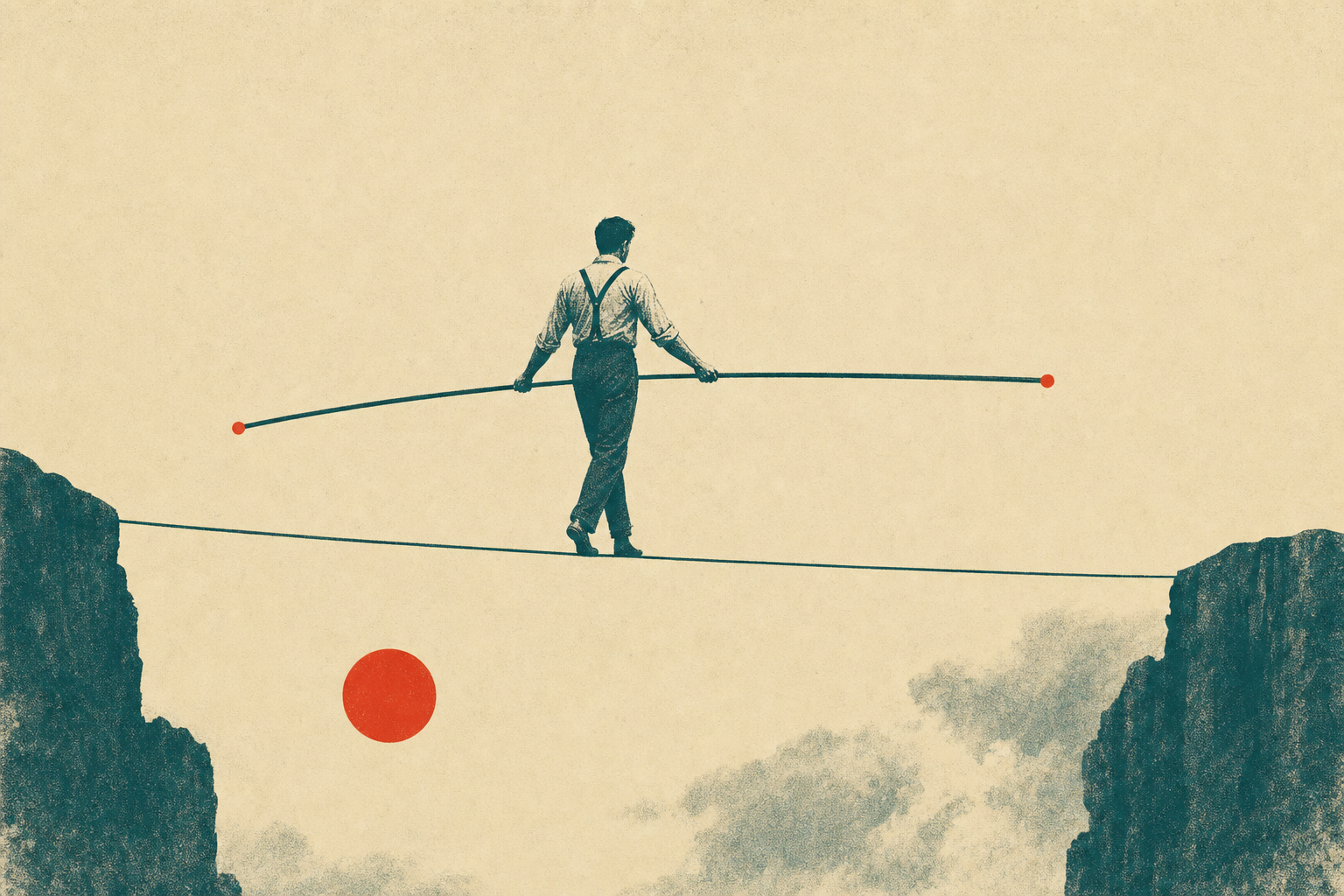
The leaders I want to be around hold both at the same time. They have a strong conviction about where they are going and why. They will plant the flag. They will say the thing. And they will hold it loosely enough that when somebody walks in with a better idea, they put the old conviction down and pick up the new one without grieving for a week.
Strong convictions, loosely held.
Why AI makes this harder
In a slow-moving environment, holding a wrong conviction is not catastrophic. The world moves at human speed. You have months to notice you were wrong, walk it back, and adjust.
That window is closing. AI accelerates everything, including your ability to be wrong at scale. If you make a confident call about your pricing model on Monday and you are still in the same call on the following Monday, you will have shipped a quarter's worth of decisions on the wrong assumption. The cost compounds faster than the old reflexes were designed for.
So the discipline gets sharper, not softer. You still have to make the call. You cannot drift in indecision while your team waits. But you have to build the loop that lets you check the call against new information at a pace that matches the environment.
Make the call this week. Check the call next week. Be willing to publicly change the call the week after.
Most leaders I know can do step one. They struggle with step three because they have built a personal brand on never being wrong. That brand is going to break in 2026.
action
1. Default to six words next time someone pushes back: "You might be right. Let me think about that." 2. Friday, write one meaningful call you were wrong about this week. Name it without flinching. 3. Identify one person in your life with standing permission to tell you you are wrong. If you do not have one, find one. 4. Pick the conviction you have held longest. Check it against new information this week. 5. Plant the flag this week. Check it next week. Be willing to move it the week after.
So I will hand the question to you. When was the last time you walked into a room with a strong position and walked out with a different one because somebody told you something you did not know? If you cannot remember, that is the place to start this week.