I sat in on a meeting a few weeks back where a marketing director walked her CEO through a quarter of underperformance. Numbers were down. Pipeline was thin. The campaign that was supposed to carry Q1 had not converted.
I watched her get to the third slide and say the sentence I have started hearing more and more in rooms like this. She said, "The model recommended this audience and this creative based on the historical data."
The room nodded. The CEO nodded. The conversation moved on. Nobody asked her what she would have done if there had been no model. Nobody asked her what she actually believed about the audience. Nobody asked what she would do differently next quarter, only what the model would do.
I sat there thinking, you just told me the model is now your boss. And the model is not paid to be accountable. You are.
That moment crystallized something I have been chewing on for the last year. AI is the most powerful diagnostic tool I have ever had access to in my business. It is also the most tempting scapegoat I have ever had access to. The line between those two uses is the whole leadership question for the next decade.
What AI is actually good at
Let me give the tools their due. In my agency right now, AI cuts the time between a question and a possible answer from days to minutes. When I want to know which service lines are generating the most retention, the old answer was a Friday-afternoon Excel session. The new answer is a query I run from my desk in the time it takes my coffee to cool.
When I want a first draft of a proposal section, AI gets me to seventy percent in about a minute. When my team is buried in a HubSpot setup that used to take a week, the right AI workflow compresses it into a single afternoon.
That is real. The leverage is here and the leaders who pretend it is not are quietly losing ground every quarter. But here is the move that separates the leaders I respect from the ones I worry about.
The diagnosis is not the decision
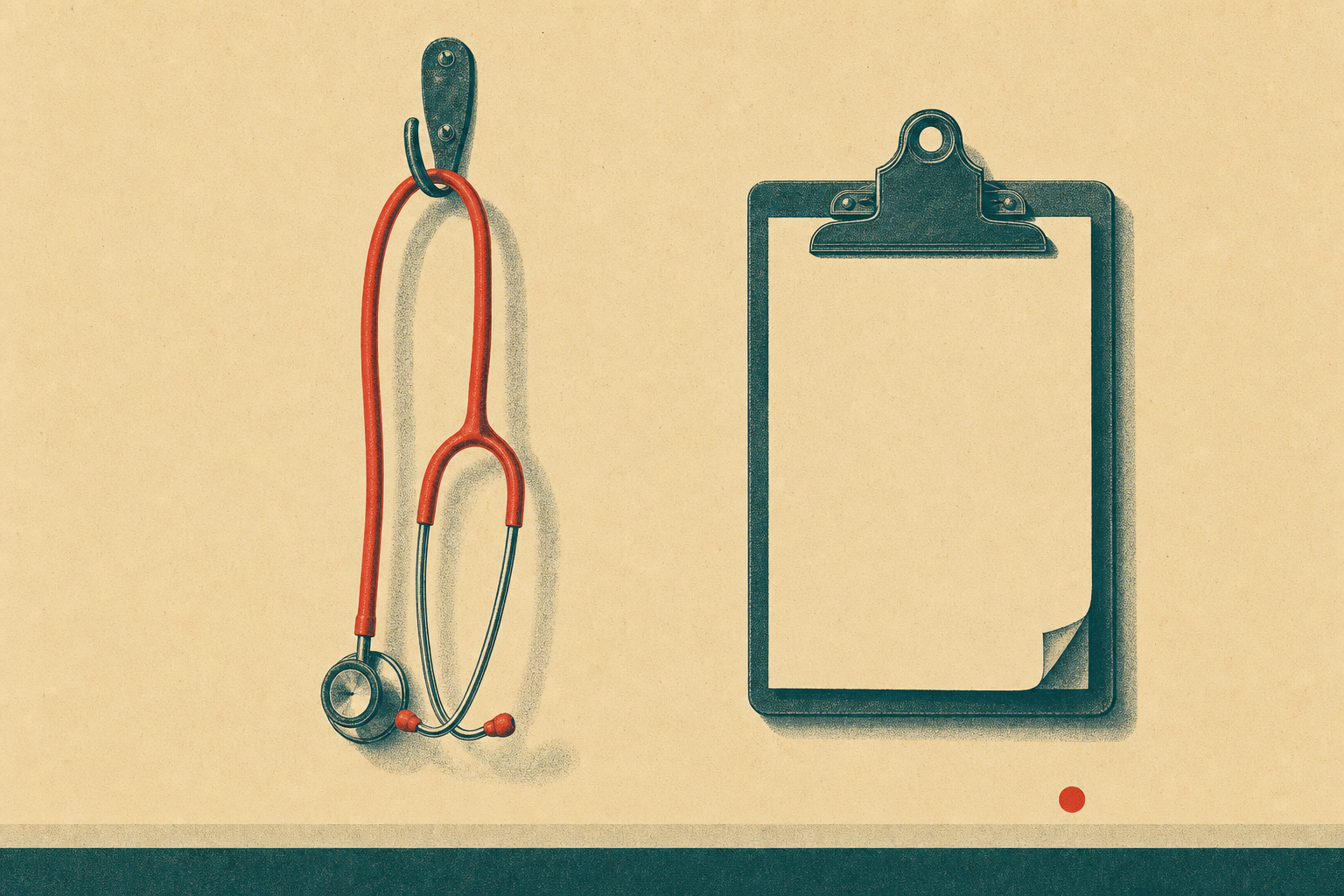
When my doctor uses a stethoscope, she gets information. The stethoscope does not write the prescription. It does not call my insurance. It does not look me in the eye and tell me I need to lose fifteen pounds. The stethoscope hands her data. What she does with the data is medicine.
That is what AI is. A stethoscope. A really good one. It surfaces information you could not have surfaced yourself.
But the moment you start saying "the AI told me to do this," you have confused the stethoscope for the doctor. You have outsourced the part of your job that nobody else can do.
The marketing director who said the model recommended the campaign was not lying. The model probably did. But the question I wanted somebody in that room to ask was, "What did you think about what the model recommended? What did you push back on? What did you change? What did you decide despite the recommendation?"
If the answer is nothing, then she did not run the campaign. The model did. And the model is not in this meeting. She is.
The three-question filter
I have started using a three-question filter on any AI-assisted output that goes out from my team.
First. What did the AI suggest?
Second. What did you change about it and why?
Third. What are you committing to as the human who is now responsible for this?
If a team member can answer all three, they are using AI well. They are using it the way it is meant to be used. They are letting it do the heavy lifting on what is possible while they own the call about what is right.
If they can only answer the first question, we have a problem. They are not using AI. They are letting AI use them. The output may be perfectly good. But there is no human in the loop who can be held to it.
This filter has changed the quality of conversation on my team. People come to me now with a recommendation, not a printout. They have already pushed back on the AI's first answer. They have weighted what to keep and what to discard. They show up with a position, not a search result.
That is what I want from a team in 2026. I do not want people who can run a model. I want people who can argue with a model and be the human signature on the result.
action
1. Pick the last AI-assisted decision your team made. Run the three-question filter on it. 2. Ban "the AI told us to" as an acceptable answer in your next meeting. 3. Ask every recommendation: what would you have done with this problem before AI existed? 4. Say "AI handles the what. Humans own the so what." out loud to your team this week. 5. Sign your name to one AI-assisted output you would have hidden behind the model.
Who in your business this week is letting "the algorithm said so" do the work that should be theirs?